
Satisfies 1 requirement
Kitech Automatic Rotary Table Type Honey Spoon Liquid Plastic Cup Filling Sealing Machine
US$7,000.00-10,000.00
1 Piece(MOQ)

I have found results from1000+products and400+suppliers aboutHoney spoon filling machine


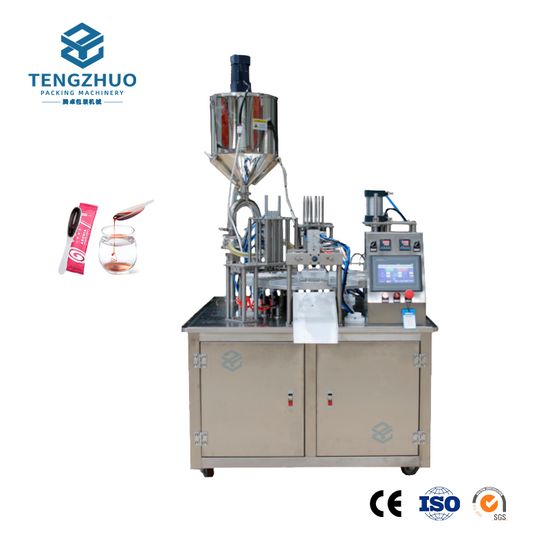


When sourcing a honey spoon filling machine, you must prioritize filling accuracy (typically ±1%) and drip-proof technology to prevent waste and maintain hygiene. Look for machines equipped with piston-driven or rotary lobe pumps specifically designed for high-viscosity liquids like honey. Ensure the contact parts are made of SUS316L stainless steel to meet food-grade safety standards and resist corrosion from the natural acidity of honey. Additionally, verify the production capacity (BPM - Bottles/Spoons Per Minute) aligns with your output requirements, and check for PLC control systems (e.g., Siemens or Delta) for stable operation.
Honey's viscosity changes significantly with temperature. A professional machine should feature a double-jacketed heating hopper with an agitator/mixer to maintain a consistent temperature (usually between 35°C to 45°C), ensuring smooth flow without degrading the honey's quality. The filling nozzles should have a blow-off or suction-back function to ensure a clean cut-off after each fill, preventing sticky residue on the spoon edges which could compromise the sealing integrity.
Since this is food processing equipment, the machine must adhere to GMP (Good Manufacturing Practice) standards. Ensure the supplier provides CE certification for electrical safety and FDA or EU food-contact material reports for all seals and tubing. The design should facilitate CIP (Clean-in-Place) or easy disassembly for manual cleaning to prevent bacterial growth and cross-contamination between batches.
Yes, most high-quality honey spoon filling machines are designed for modular integration. You should confirm if the machine supports upstream connection to spoon feeding systems and downstream connection to film sealing and packing machines. Check for signal synchronization capabilities via RS485 or Ethernet interfaces to ensure the entire line operates cohesively without bottlenecks.
The most critical step is to send physical samples of your spoons and honey to the manufacturer for testing before production begins. Request a FAT (Factory Acceptance Test) video showing the machine running your specific product at the rated speed. For high-value transactions, consider using Made-in-China.com's Secured Trading Service to ensure payment is only released after shipping documents are verified.
Focus on the Total Cost of Ownership (TCO) rather than just the sticker price. Negotiate for a comprehensive spare parts package (e.g., extra seals, heating elements, and sensors) to be included in the initial price. Clarify the warranty period (ideally 12-24 months) and demand a written commitment regarding remote technical support response times (e.g., within 24 hours).
Ensure the machine is packed in a fumigated solid wood case with vacuum moisture-proof packaging to prevent rust during sea transit. For shipping to your country, clarify the Incoterms (FOB or CIF); for large equipment, DDP (Delivered Duty Paid) might be complex, so hiring a local customs broker is advised. Ask the supplier if they provide installation videos and English-language manuals, or if they can dispatch engineers for on-site commissioning if required.
Prioritize Audited Suppliers who have undergone on-site inspections by third-party institutions like SGS or TÜV Rheinland. Check their Business License and Export Experience—suppliers who have exported to the US or EU markets previously are more likely to understand your local voltage (e.g., 110V/220V/380V) and safety requirements.