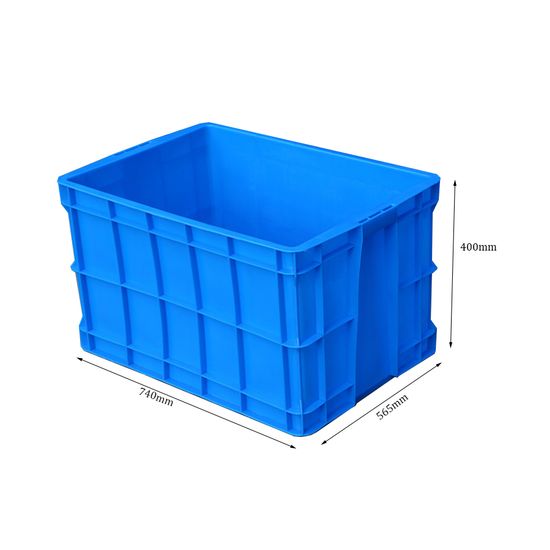
Satisfies 1 requirement
Straight Wall Box China Factory Cheap Price PP Container Fruit Vegetable Small Parts Storage
US$6.00-8.00
300 Pieces(MOQ)

I have found results from200000+products and80000+suppliers aboutSmall container




The choice of material directly impacts durability and application. For industrial or shipping use, prioritize Corten steel (SPA-H) for its superior atmospheric corrosion resistance. For food-grade or chemical storage, ensure the interior uses 304 or 316 stainless steel or BPA-free high-density polyethylene (HDPE). Always verify the tare weight versus payload capacity to ensure the structure meets your specific logistical needs.
If the container is for international transport, it must be ISO-certified (ISO 6346) and carry a valid CSC plate (International Convention for Safe Containers). For specialized uses, look for CE marking (Europe) or UL certification (USA). If used for hazardous materials, ensure compliance with IMDG (International Maritime Dangerous Goods) codes and check for IP65/IP67 waterproof and dustproof ratings.
Focus on the welding quality (look for continuous, smooth beads) and the locking mechanism. High-security containers should feature heavy-duty lock boxes to prevent bolt cutter access. Check the door seal gaskets (EPDM material is preferred) to ensure they are watertight and airtight. For modular or stackable units, confirm the corner casting strength meets stacking load requirements.
Suppliers on Made-in-China.com often provide OEM/ODM services, including custom dimensions (6ft, 8ft, 10ft), internal shelving, ventilation systems, and electrical installations. You can also request custom branding/logo painting using marine-grade epoxy paint to ensure longevity in harsh environments.
Always request a Pre-Shipment Inspection (PSI) conducted by a third-party agency like SGS or Intertek. Ensure the sales contract specifies allowable tolerances for dimensions and paint thickness. Use Secure Payment services provided by Made-in-China.com to ensure funds are only released upon proof of shipment and compliance with quality standards.
Since small containers (under 20ft) cannot always be shipped as standalone ISO units, consider 'One-Way' leasing or nesting (placing smaller containers inside larger 40ft HC containers) to drastically reduce ocean freight costs. Clarify Incoterms early; FOB (Free On Board) is generally recommended for buyers who have their own freight forwarder to control local logistics.
Ensure the supplier provides a Commercial Invoice, Packing List, and Bill of Lading. Specifically for containers, you may need a Certificate of Origin to benefit from preferential tariffs and a CSC Safety Approval Certificate. Check your local country's import duties and VAT for 'steel structures' or 'shipping containers' to avoid unexpected costs at the port.
Focus on volume-based pricing; ordering in batches of 5 or 10 units often triggers a 10-15% discount. Negotiate for extended warranties (typically 1-3 years) on the paint and structural frame. For long-term partnerships, ask for favorable payment terms such as a 30% deposit and 70% balance after passing the quality inspection but before loading.