
Satisfies 1 requirement
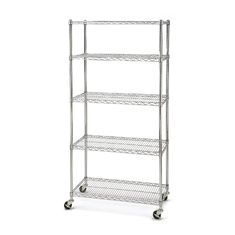
Tableware Standard Stainless Steel 90mm* 40mm * 120mm Kitchen Shelf Metal Shelves
US$10.00-25.00
100 Sets(MOQ)

I have found results from100000+products and30000+suppliers aboutStainless steel kitchen shelf


For commercial and high-end residential use, 304 Stainless Steel is the industry standard due to its excellent corrosion resistance and food safety properties. If the shelf will be used in highly corrosive environments (like near the sea or in heavy chemical cleaning areas), 316 Stainless Steel is preferred. Avoid 201 Stainless Steel for long-term wet environments as it is prone to rusting over time.
Check the thickness of the stainless steel sheets (ideally 0.8mm to 1.5mm) and the diameter of the support posts. Ensure the shelf uses triangular reinforcement or heavy-duty bolts at the joints. For B2B procurement, always request the Static Load Test report to confirm the shelf can handle the weight requirements of commercial kitchen equipment.
A brushed finish (satin) is highly recommended as it effectively hides fingerprints and scratches compared to a mirror finish. Ensure the product has smooth, burr-free edges and seamless welding to prevent bacteria buildup, which is critical for HACCP compliance in food service environments.
Buyers should prioritize suppliers with NSF (National Sanitation Foundation) certification, which guarantees the product meets strict public health standards. For the European market, ensure the materials comply with LFGB (Food and Feed Code) regulations regarding food-contact materials.
Always arrange for a Pre-Shipment Inspection (PSI) by a third-party agency like SGS or Intertek. Specifically, instruct them to perform a Salt Spray Test to verify the stainless steel grade and a Loading Test to ensure structural stability before the final payment is released.
Since kitchen shelves are often bulky, look for suppliers offering KD (Knock-Down) packaging. This significantly reduces the CBM (Cubic Meter) volume, lowering ocean freight costs. Ensure the assembly instructions are clear and all hex keys/tools are included in the package.
Focus on Tiered Pricing based on volume. For example, ask for a 5-10% discount if the order exceeds a full 20GP container. Additionally, negotiate for spare parts (like extra leveling feet or screws) to be included at no extra cost to handle potential minor losses during local distribution.
Utilize the Secured Trading Service on Made-in-China.com to ensure your payment is held in escrow until you confirm receipt of goods. Always keep all communication within the official platform messaging system to maintain a valid evidence chain in case of disputes.