
Satisfies 1 requirement
3.5 Ton Telescopic Boom Forklift Compact Telehandler Telescopic Handler for Construction and Material Handling
US$15,800.00-18,600.00
1 Piece(MOQ)

I have found results from10000+products and8000+suppliers aboutTelescopic handler telehandler


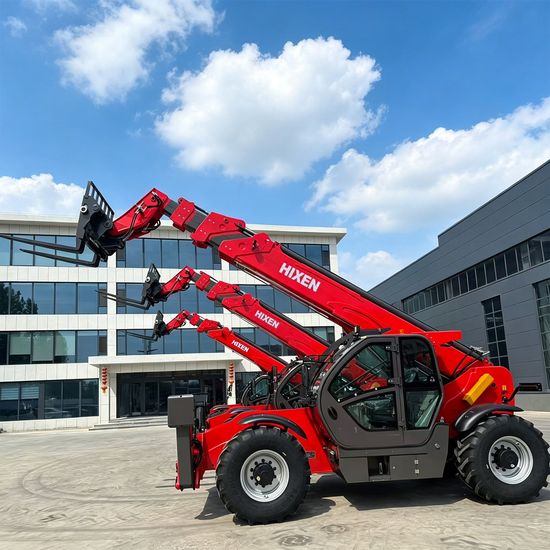


Buyers must evaluate the Maximum Lift Capacity and Maximum Forward Reach based on their specific job site requirements. For construction, a capacity of 2.5 to 4 tons is standard, while heavy industrial use may require 5 tons or more. Always review the Load Chart provided by the manufacturer, as lifting capacity decreases significantly as the boom extends forward. Ensure the machine's Rated Operating Capacity (ROC) aligns with your heaviest typical load to prevent tipping risks.
Compliance with local environmental regulations is critical. For the US and European markets, ensure the engine meets EPA Tier 4 Final or EU Stage V emission standards. For markets with less stringent regulations, Tier 2 or Tier 3 engines may be more economically feasible and easier to maintain due to simpler fuel system requirements. Verify the engine brand; choosing global brands like Cummins, Perkins, or Yanmar ensures easier access to spare parts and international service networks.
To ensure operational safety and legal import, the machine must adhere to ISO 12100 for machinery safety. For the European market, a CE Certification is mandatory. Additionally, the cabin must feature ROPS (Roll-Over Protective Structure) and FOPS (Falling Object Protective Structure) certification to protect the operator. Check for the inclusion of a Longitudinal Load Moment Indicator (LLMI), which is a critical safety technology that prevents the machine from overturning.
A Telehandler's value is maximized by its ability to use various attachments. Ensure the unit features a Quick-Hitch system compatible with pallet forks, buckets, man-baskets, and crane jibs. Confirm that the Auxiliary Hydraulic Flow is sufficient to power demanding attachments like sweepers or augers. Sourcing from suppliers who offer customized attachment packages can reduce the Total Cost of Ownership (TCO) by eliminating the need for multiple specialized machines.
The biggest risks include shipping damage, non-compliance with local road laws, and lack of after-sales technical support. To mitigate these, request a Pre-Shipment Inspection (PSI) by third-party agencies like SGS or Intertek. Ensure the supplier provides a comprehensive warranty (typically 12-24 months) and confirms the availability of digital hydraulic and electrical schematics for local repairs.
Due to their size, Telehandlers are usually shipped via Ro-Ro (Roll-on/Roll-off) or Flat Rack containers. Ro-Ro is often safer for the machine's structure but can be more expensive. If using a standard container, the machine may require partial disassembly (e.g., removing tires or the boom). Always clarify the Incoterms; CIF (Cost, Insurance, and Freight) is common for new buyers, but FOB (Free On Board) allows experienced buyers better control over freight costs and customs clearance.
Focus on volume-based pricing if ordering more than two units, as shipping costs per unit drop significantly. Negotiate for the inclusion of a 'Wear-and-Tear' spare parts kit (filters, seals, sensors) in the initial purchase price. For high-value transactions, use Secure Payment methods such as Letters of Credit (L/C) or trade assurance services provided by reputable platforms like Made-in-China.com to protect your capital until the Bill of Lading is issued.