
Satisfies 1 requirement
1 Ton Mini Digger Price Bagger Machine Excavadora Excavators Tractor Loader for Sale Cheap Excavator
US$2,900.00-3,800.00
1 Piece(MOQ)

I have found results from200000+products and60000+suppliers aboutTractor excavator


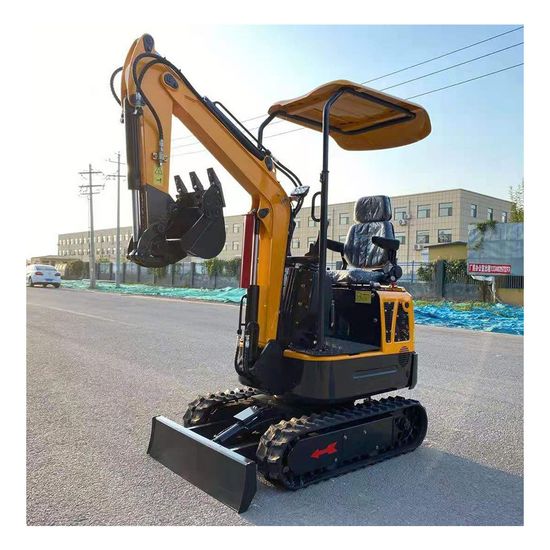


Selecting a tractor excavator (backhoe loader) requires balancing engine power (HP) and digging depth. For light landscaping, a 25-50 HP model is sufficient, while heavy construction demands 75-100+ HP. Ensure the hydraulic flow rate is compatible with attachments like augers or breakers. Prioritize models with four-wheel drive (4WD) for stability on uneven terrain and verify that the operating weight aligns with your site's soil load-bearing capacity.
Buyers must confirm the use of high-strength manganese steel for the boom and arm to prevent cracking under stress. Check for branded hydraulic pumps and valves (e.g., Rexroth or Permco) to ensure smooth operation. Compliance is critical: ensure the machine meets EPA Tier 4 or EU Stage V emission standards for North American and European markets. Additionally, verify ROPS (Roll-Over Protective Structure) and FOPS (Falling Object Protective Structure) certifications for operator safety.
Focus on the reinforcement of pivot points and the presence of accessible grease nipples for easy lubrication. Ask for the hardness rating of the bucket teeth and the thickness of the wear plates. A reliable supplier should provide a detailed maintenance schedule and guarantee the availability of wear-and-tear spare parts (filters, seals, hoses) for at least 5 years post-purchase.
These machines are versatile 'Swiss Army knives' for industries such as municipal engineering, agricultural irrigation, and urban road construction. They are ideal for trenching for cable laying, foundation digging for small buildings, and material handling in warehouses or farms. Their ability to transition quickly between loading (front bucket) and excavating (rear arm) makes them highly efficient for multi-tasking job sites.
The biggest risks include non-compliance with local emission laws, which can lead to customs seizure, and damage during maritime transit. To mitigate this, use Professional Third-Party Inspection (TPI) services like SGS or Intertek before the final payment. Ensure the machine is treated with anti-rust wax and securely fastened in a Flat Rack or 40HQ container to prevent shifting during sea transport.
Don't just negotiate on the sticker price; negotiate for value-added packages. Request a 'spare parts kit' (including hydraulic cylinders and seal rings) to be included in the price. For bulk orders, push for OEM customization (e.g., specific colors or brand logos) and a warranty extension to 18 or 24 months. Always clarify the Incoterms, preferring FOB or CIF to clearly define where the risk transfers.
Utilize Secured Trading Services provided by Made-in-China.com to ensure your funds are only released after the supplier provides proof of shipment. Avoid direct wire transfers to private accounts; always use corporate bank accounts verified by the platform. For large-scale machinery, a payment structure of 30% deposit and 70% against the Bill of Lading (B/L) copy is standard industry practice.
Heavy machinery requires specialized logistics. Confirm if the machine can be disassembled to fit into a standard container to save on freight costs, or if it must ship via Roll-on/Roll-off (RoRo) vessels. Ensure the supplier provides a Certificate of Origin to help you benefit from Free Trade Agreements (FTAs), which can significantly reduce import tariffs in many countries.