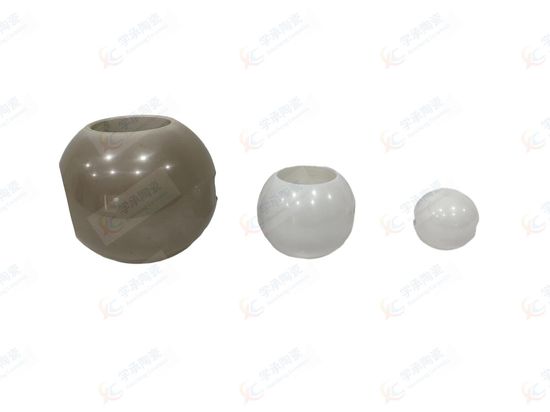
High-Performance Alumina Ceramic Ball Valves for Petrochemical Industries

Premium Quality Alumina Valves for Heavy-Duty Mining Applications

High-Performance Alumina Ceramic Butterfly Valves for Industrial Use

I have found results from400+products and200+suppliers aboutAlumina valve


Buyers must prioritize the purity level of the Alumina (Al2O3), typically ranging from 95% to 99.7%. Higher purity offers superior corrosion resistance and hardness, but may be more brittle. Ensure the supplier provides data on density (typically ≥3.6g/cm³) and Vickers hardness (HV ≥1500) to guarantee the valve can withstand abrasive media without premature wear.
For high-pressure or chemical applications, ensure the manufacturer adheres to ISO 9001 for quality management. If the valves are used in fluid control, compliance with ASME B16.34 (Valves Flanged, Threaded, and Welding End) or API 6D standards is critical. For food or pharmaceutical applications, verify FDA or REACH compliance to ensure no toxic leaching occurs from the ceramic components.
Alumina is sensitive to thermal shock. Request the Coefficient of Thermal Expansion (CTE) and maximum operating temperature (often up to 1600°C). For mechanical integrity, ask for flexural strength (MPa) data. It is highly recommended to request a hydrostatic pressure test report and a helium leak test (for vacuum applications) to ensure the valve body and seals are defect-free.
A top-tier supplier should support precision machining to achieve tolerances within ±0.001mm and surface roughness of Ra <0.2μm for sealing faces. They should be able to provide customized structural designs (e.g., ball, gate, or plug valves) and offer ceramic-to-metal bonding or specialized flange interfaces to integrate seamlessly with your existing piping systems.
The greatest risk is brittle fracture due to mechanical shock during transit. You must mandate customized shock-absorbent packaging, such as vacuum-sealed foam inserts and reinforced wooden crates. Ensure the shipment is covered by All-Risk Marine Insurance and that the Bill of Lading includes a 'Fragile' handling instruction.
Utilize Made-in-China.com's Secured Trading Services to protect your payment until delivery is confirmed. Before final payment, hire a third-party inspection agency (like SGS or Intertek) to perform a Pre-Shipment Inspection (PSI), specifically checking for micro-cracks using Dye Penetrant Testing (PT) which are invisible to the naked eye.
Focus on Total Cost of Ownership (TCO) rather than just the unit price. Negotiate for spare parts (like ceramic seats or seals) to be included at a discount. For long-term contracts, ask for a price-lock agreement to hedge against fluctuations in raw alumina powder costs and energy prices used in the sintering process.
Verify the HS Code (typically 8481.80 or 6909.11) to determine accurate import duties in your country. For urgent replacements, Air Freight is viable but costly; for bulk projects, Sea Freight (FOB or CIF) is standard. Ensure the supplier provides a Certificate of Origin to potentially benefit from preferential tariff rates under specific trade agreements.