SourcingAI

Tortoise shell mesh manufacturers

I have found results from400+products and200+suppliers aboutTortoise shell mesh

Sourcing guidance for Tortoise Shell Mesh

What are the primary usage scenarios and functions of Tortoise Shell Mesh?

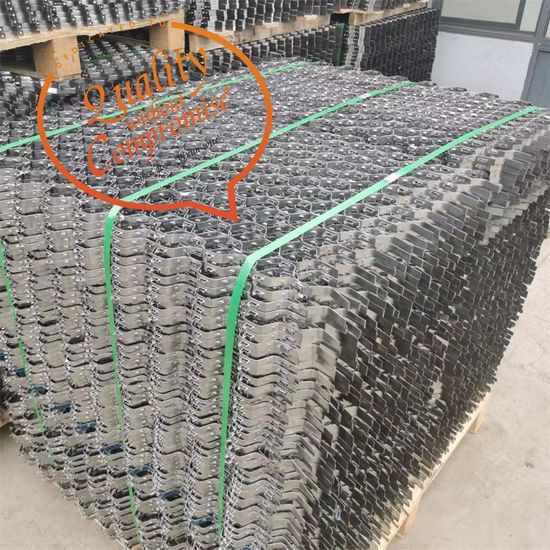
Tortoise Shell Mesh, also known as Hexsteel, is primarily used as a reinforcement structure for refractory linings in high-temperature and high-wear environments. Its main function is to anchor the refractory material (like castable or ceramic) to the inner walls of equipment, preventing cracking, peeling, and erosion. Common applications include petrochemical reactors, cyclones, furnaces, and cement kilns.

What key technical specifications should I prioritize when selecting this product?

You must focus on the material grade, typically 304, 310S, or 410 stainless steel, depending on the operating temperature. Pay close attention to the mesh height (usually 10mm to 50mm) and thickness (1.0mm to 3.0mm). Ensure the opening size (cell diameter) matches your refractory aggregate size to ensure a mechanical bond that prevents the lining from falling off under thermal stress.

What compliance standards and quality certifications are required for industrial use?

Suppliers should provide MTC (Material Test Certificates) to verify chemical composition and mechanical properties. Look for compliance with ASTM or GB/T standards related to steel mesh. For international projects, ensure the manufacturer holds ISO 9001 certification and can provide third-party inspection reports (such as SGS or BV) to guarantee the welding strength and dimensional accuracy.

How does the choice of material affect the economic feasibility of the project?

While Carbon Steel is cheaper, it is only suitable for low-temperature environments. For high-temperature applications (above 600°C), investing in 310S (High-Chrome Nickel) is more economically feasible in the long run because it reduces maintenance frequency and downtime. Calculate the Total Cost of Ownership (TCO) by factoring in the lifespan of the mesh versus the cost of frequent refractory repairs.

Cross-Border Procurement & Risk Management for Tortoise Shell Mesh

What are the common risks in purchasing Tortoise Shell Mesh internationally?

The biggest risk is material substitution, where a supplier might use a lower grade of stainless steel than specified. Another risk is welding point failure, which can lead to the collapse of the refractory lining. To mitigate this, always request pre-shipment samples and use Made-in-China.com's Secured Trading services to ensure the goods meet the agreed-upon technical specifications before final payment.

How should I negotiate with suppliers to ensure quality and price balance?

Negotiate based on weight and volume tiers; for orders exceeding 500 square meters, you can typically secure a 10-15% discount. Demand a detailed technical drawing as part of the contract. Ask the supplier if they offer customized claw shapes or punching holes, which can improve the anchoring effect without significantly increasing the unit price.

What are the best practices for shipping and logistics to ensure product integrity?

Tortoise Shell Mesh is heavy and can be easily deformed. Insist on palletized packaging with steel strapping and waterproof wrapping to prevent rust during sea freight. For large projects, use FOB (Free On Board) terms to maintain control over the shipping costs and choose a logistics provider experienced in industrial hardware and steel products.

How can I verify the reliability of a supplier on Made-in-China.com?

Prioritize Audited Suppliers who have undergone on-site inspections. Check their business scope to ensure they are actual manufacturers rather than small trading companies. Review their export history and buyer feedback specifically for industrial mesh products to confirm their capability in handling large-scale engineering orders.

Related queries