
Satisfies 1 requirement
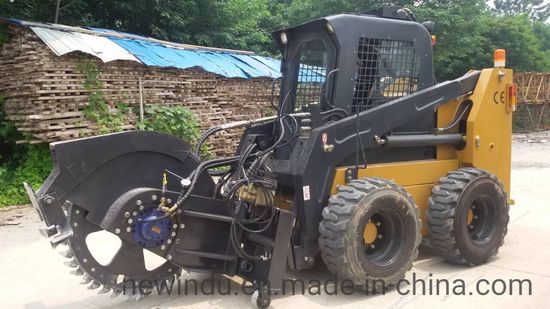
Factory customized diesel 4 wheel grab mini sugarcane mini loader for grabbing woods
US$51,000.00-51,999.00
3 Pieces(MOQ)

I have found results from50000+products and10000+suppliers aboutGrab loader




When selecting a grab loader, you must prioritize the lifting capacity (SWL) and maximum reach to ensure it meets your operational requirements. Pay close attention to the hydraulic system pressure and pump flow rate, as these determine the speed and smoothness of the grab's movement. For the structural components, ensure the boom is made of high-tensile steel (e.g., Q345B or HG785) to prevent bending under heavy loads. Additionally, verify the rotation angle (typically 360-degree continuous rotation) and the clamping force of the attachment to ensure efficiency in handling materials like timber, scrap, or waste.
For the European market, the equipment must carry the CE Marking and comply with the Machinery Directive 2006/42/EC. For North American buyers, adherence to ANSI/ASME standards and OSHA regulations is critical. Globally, the manufacturer should hold an ISO 9001:2015 certification to guarantee quality management systems. Furthermore, ensure the hydraulic hoses and components meet SAE or DIN standards to facilitate easy replacement and maintenance in your local region.
Request details on the surface treatment and anti-corrosion coating, such as sandblasting followed by epoxy zinc-rich primer, which is essential for outdoor or maritime use. Check if the pivot points are equipped with self-lubricating bushings or easily accessible grease nipples. The quality of the hydraulic cylinders is paramount; look for those with chrome-plated piston rods to resist wear and environmental damage. Always ask for a fatigue test report for the boom structure if the machine will be used in high-cycle applications.
Professional suppliers on Made-in-China.com often offer customization for attachment types, such as timber grabs, orange peel grapples, or clamshell buckets, depending on your specific cargo. You should also discuss mounting compatibility—whether the loader is for a truck chassis, a stationary pedestal, or a tractor. Inquire about remote control systems versus manual lever controls to improve operator safety and visibility, and consider adding overload protection valves to prevent structural failure during operation.
To minimize risk, always conduct a factory audit or hire a third-party inspection agency (like SGS or Intertek) to perform a Pre-Shipment Inspection (PSI). This ensures the machine's performance matches the technical data sheet. Use Secure Payment services provided by platforms like Made-in-China.com to ensure funds are only released upon proof of shipment. Additionally, request a video of the machine's functional test featuring the specific serial number of your unit before it is packed.
Due to the size and weight, grab loaders are typically shipped via FR (Flat Rack) containers or Ro-Ro (Roll-on/Roll-off) vessels. If the unit is disassembled to fit into a standard 40HC container, ensure the supplier provides a detailed assembly manual and video. Clarify the Incoterms clearly; CIF (Cost, Insurance, and Freight) is common, but FOB (Free On Board) allows you more control over the shipping timeline and costs through your own freight forwarder.
Negotiate a spare parts package (e.g., seals, filters, sensors, and hydraulic hoses) to be included in the initial shipment to avoid downtime. Confirm the warranty period (usually 12–24 months on major components) and the supplier's ability to provide technical support via video call. Choose suppliers on Made-in-China.com who have a proven track record of exporting to your region, as they are more likely to understand the local maintenance challenges and part availability.