
Satisfies 1 requirement
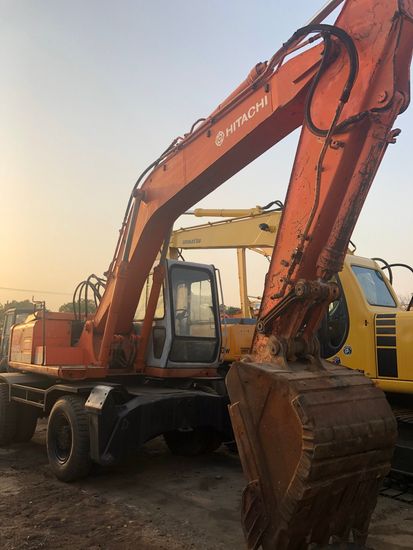
Original 16 Ton Original Used Hitachi Wheel Excavator Ex160wd with Best Engine and Pump
US$13,800.00-18,800.00
1 Set(MOQ)

I have found results from50000+products and10000+suppliers aboutHitachi wheel excavator






When selecting a Hitachi wheel excavator, prioritize the engine power (kW/HP) and hydraulic system efficiency. Ensure the model features the HIOS III hydraulic system for increased operating speed and reduced fuel consumption. Check the operating weight to match your terrain requirements and verify the maximum digging depth and reach to ensure it meets your specific project needs. For B2B buyers, fuel efficiency ratings and Tier 4 Final or Stage V emission compliance are critical for long-term operational cost savings.
Request the Product Identification Number (PIN) or Serial Number to verify the manufacturing year and service history through official channels. For refurbished units, demand a comprehensive inspection report covering the main pump, swing motor, and transmission. Pay close attention to the undercarriage and tire condition, as these are high-wear components. It is highly recommended to use third-party inspection services available on Made-in-China.com to validate the machine's mechanical integrity before final payment.
Ensure the equipment carries the CE Marking for European markets or meets EPA standards for the North American market. The manufacturer should ideally hold ISO 9001 (Quality Management) and ISO 14001 (Environmental Management) certifications. Additionally, verify that the ROPS (Roll-Over Protective Structure) and FOPS (Falling Object Protective Structure) certifications are valid to ensure operator safety and legal compliance in regulated regions.
The main risks include equipment mismatch, hidden mechanical defects, and shipping damage. Mitigate these by using Trade Assurance services on Made-in-China.com to protect your funds until the goods are verified. Always request a live video inspection or a 'cold start' video of the engine. Ensure the contract specifies the incoterms (e.g., FOB or CIF) clearly to define when the risk transfers from the seller to the buyer.
For wheel excavators, Ro-Ro (Roll-on/Roll-off) shipping is generally the safest and most efficient method as the machine can be driven onto the vessel. If Ro-Ro is unavailable, Flat Rack containers are a viable alternative for oversized machinery. Ensure the supplier provides professional lashing and rust-proofing (wax coating) for sea transit to prevent corrosion from salt air during long-distance maritime transport.
Negotiate for a 'wear-parts package' to be included in the initial purchase, covering filters, seals, and specialized bolts for the first 1,000 hours of operation. Confirm the compatibility of aftermarket parts versus genuine Hitachi components. Ask the supplier for a guaranteed response time for technical support and verify if they can provide digital parts manuals and diagnostic software access to facilitate local repairs.